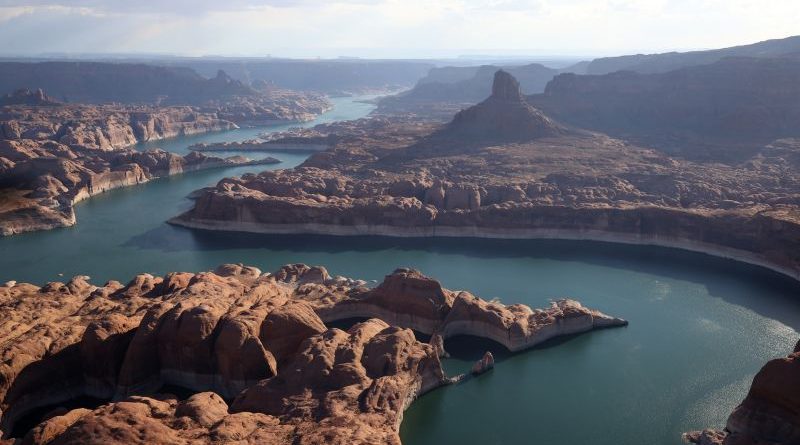
Lake Powell Faces Declining Water Levels and Storage Capacity
Lake Powell, located on the border of Utah and Arizona, is the second-largest reservoir created by humans in the United States. A recent report highlights that the lake is not only suffering from decreasing water levels due to drought but is also losing its overall storage capacity.
Declining Capacity and Water Levels
Since the Glen Canyon Dam was completed in 1963, Lake Powell has lost nearly 7% of its storage capacity. This decline poses serious concerns for water management in the region. As climate change continues to affect weather patterns, the ongoing drought has contributed to significant drops in water levels.
Lake Powell serves as a critical water source for millions of people. The situation is becoming increasingly alarming as the lake’s ability to hold water decreases. The combination of higher temperatures and less rainfall has led to a considerable drop in inflow to the reservoir.
Experts are warning that if these trends continue, it could lead to severe water shortages for communities that rely on Lake Powell. The lake’s future is uncertain, and officials are looking for ways to manage the water supply effectively. Many are concerned about the long-term implications of this decline, particularly for agricultural and urban needs.
As the situation unfolds, it is essential to monitor the water levels and implement strategies that can mitigate the impact of ongoing drought conditions.
Image: CNN — source