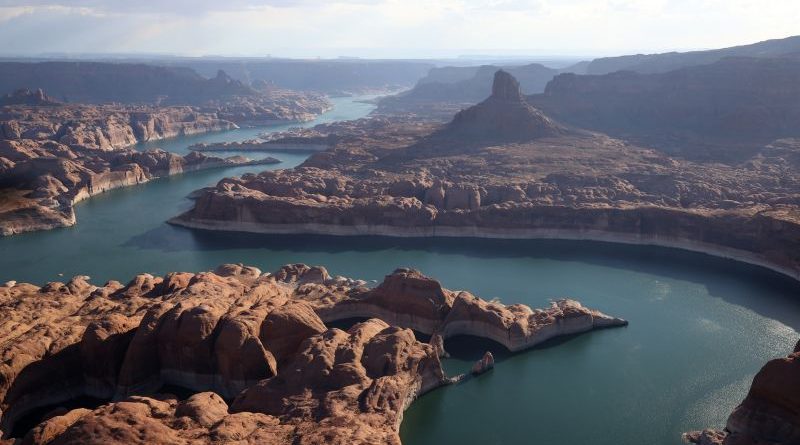
Lake Powell Faces Water Crisis as Capacity Shrinks
Lake Powell, the second-largest artificial lake in the United States, is experiencing a significant decrease in both water levels and its overall storage capacity. A recent report has revealed that since the construction of the Glen Canyon Dam in 1963, the reservoir has lost nearly 7% of its potential storage.
This alarming trend is largely due to prolonged drought conditions affecting the region, which have led to diminished inflows into the lake. The current water level is the lowest it has been in decades, raising concerns for water supply not just for recreational use but also for agricultural and municipal needs in the surrounding areas.
The decline in water levels is not just a temporary issue; experts warn that if drought conditions continue, the situation could worsen. The reservoir is essential for managing water resources across several states in the western United States, including Arizona, California, and Nevada. Its decreasing capacity poses a risk to these states, which rely heavily on the lake for irrigation and drinking water.
Officials and scientists are closely monitoring the situation and are working on strategies to address the challenges posed by climate change and water scarcity. There is a growing call for sustainable water management practices to ensure that the lake can continue to provide for the needs of the region.
As Lake Powell continues to face these challenges, it highlights the broader implications of water management and environmental sustainability in the face of changing climate conditions. The future of this vital resource remains uncertain, and it is crucial for stakeholders to collaborate on solutions to protect the lake and its surrounding ecosystems.
Image: CNN — source